
Workshops and short courses for pain, stress, boundaries and overwhelm
My talks, workshops and short courses offer practical, accessible introductions to the kinds of challenges I support clients with in my 1:1 coaching work. From boundaries, back pain and hypersensitivity to perfectionism, burnout, self-care and the struggle to switch off, these sessions are designed to help people understand the patterns behind what they are experiencing and take the first steps towards meaningful change. Rather than offering surface-level advice, they open up a deeper conversation about what is going on underneath — and how personalised support can help that change become lasting.
Workshop: an introduction to boundaries and consent
Can you say NO so your body backs you?
A 2-hour workshop exploring what it really takes to say no
Wondering if your team/organisation would benefit from this workshop? Book a discovery call to discuss.
A 2-hour session that explores
why saying no can feel so difficult
the patterns behind people-pleasing
the energy patterns that make boundaries feel uncomfortable or confusing
how to help your body get comfortable with saying no
Perfect if you often feel overwhelmed, resentful, responsible for everyone else, or struggle to put your own needs first.
How this workshop is different from typical assertiveness training
This isn't about learning a set of assertiveness techniques. Instead, it's a chance to explore what happens in your nervous system, and your whole body, when you have to say no.
And what you can do about it.
Many people struggle to say no - even the ones who look like they're good at it.
Perhaps you tense up, freeze, start explaining yourself, feel guilty, change your mind — or say yes before you've even had time to think.
Or maybe you've got very good at saying no, but only by shutting down, withdrawing or making sure nobody can get close enough to ask again.
This workshop looks at what happens in your body (as well as your brain) when you have to decide what you want and how you're going to react.
We'll explore the physical and emotional patterns that crop up and use simple body-based exercises to experiment with a different way of responding.
What we explore in this workshop
We uncover common physical and emotional patterns and use simple body-based exercises to experiment with a different way of responding. We look at:
Why saying no can feel difficult even when you know exactly what you want
How we minimise our own needs or automatically put someone else's needs first
What your body may be telling you through tension, freezing, pulling away or other responses
The difference between a YES, NO and MAYBE — and how each can feel in your body
Consent as something you actively feel, communicate and respond to
What happens when your NO meets another person's disappointment, pressure or persistence
How to stay connected to yourself without having to collapse, fight, run away or over-explain
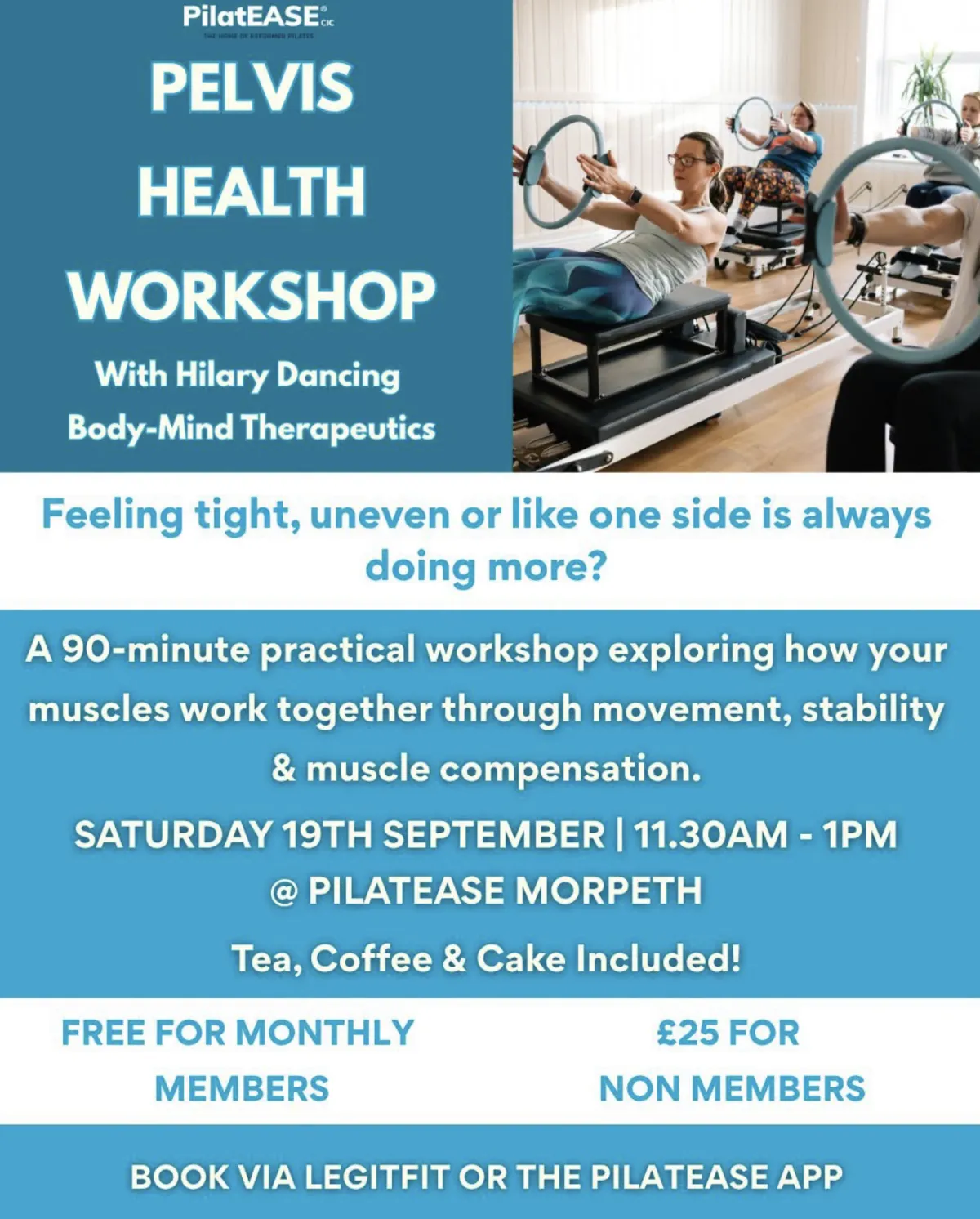
Workshop: Pelvic alignment for balance mobility and pain reduction
An imbalanced pelvic creates strain, weakness and pain in the body, and also contributes to anxiety and fatigue..
Women are particularly prone to problems are exacerbated by pregnancy and childbirth. But men can suffer too.
This workshop shows you why exercise alone often can't fully resolve lower back and knee pain. And what to do about it.
It's invaluable for people who spend a lot of time sitting at a desk, as well as people with physically demanding jobs. Understanding what governs pelvic alignment can help prevent problems before they occur, as well as addressing existing issues.
Wondering if your team or organisation would benefit from this course?
Books a discovery call and let's talk.
Accessibility & inclusion
What makes it possible for you to participate?
The workshop includes conversation, gentle movement, body-awareness exercises and paired activities.
Because we are directly exploring consent, I do ask you to be willing to consider how you feel about giving and receiving a small amount of consensual touch. If you're unsure about this, please get in touch before booking and we can talk about it.
If you have mobility, sensory, communication, neurodivergence, language or other access requirements, please contact me before booking and we'll talk through what you need and what the venue can accommodate.
You don't need to know whether it officially “counts” as an accessibility need. If there's something that would make it easier for you to take part, I'd rather you asked.