Kinesiology in Morpeth,
Northumberland
Kinesiology is a holistic therapy that uses muscle testing to explore physical problems and the emotional and energetic patterns that may be contributing to them. It incorporates both physical and more exploratory approaches and can be helpful if you are experiencing persistent pain or tension, chronic health conditions, stress, anxiety or burnout.
With over 10 years’ experience in Touch for Health Kinesiology and a wider body-mind practice including energy healing and coaching, I can look beyond the presenting problem to explore what may be contributing to it and support you towards positive change.
Proud to work from the Oldgate Centre, Morpeth
Two ways I use kinesiology
Kinesiology is a broad discipline, and it can be used in different ways. I work across both physical and more exploratory approaches, tailoring the way I use muscle testing to what you need and what we're trying to understand.
Functional Kinesiology
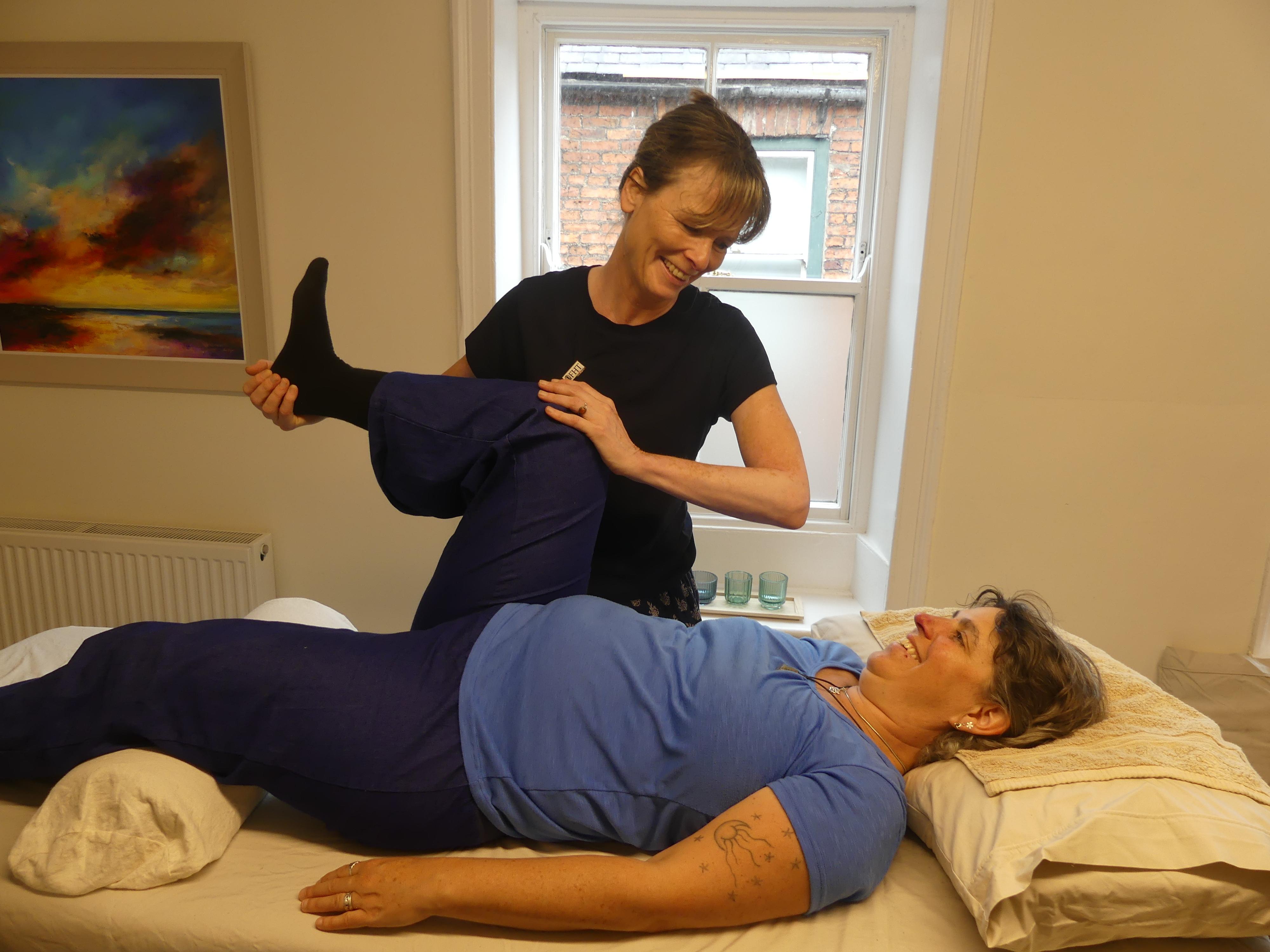
Functional kinesiology focuses on how your body is working and moving.
Through manual muscle testing and movement assessment, we can explore how individual muscles and movement patterns are functioning and identify areas where the body may not be working as efficiently or comfortably as it could.
This approach can be particularly useful when you're experiencing physical problems such as pain, tension, restricted movement or postural imbalance. The aim is to understand the physical pattern and use appropriate kinesiology techniques to support more balanced and effective movement.
Exploratory Muscle Testing
Muscle testing can also be used in a more exploratory way to discover what lies behind your symptoms.
This can include emotional responses, beliefs, habitual patterns, stress and sensitivities that you may not have consciously connected with how you are feeling.
Rather than relying only on what you already know or can explain, muscle testing provides another way to explore your responses and associations.
This application of kinesiology is often helpful to explore persistent pain or chronic health conditions that have not resolved with other treatment, as well as sensitivies and intolerances. It can also offer insight into things like insomnia, anxiety, fatigue and nervous system dysregulation,
What you can expect from a Kinesiology session
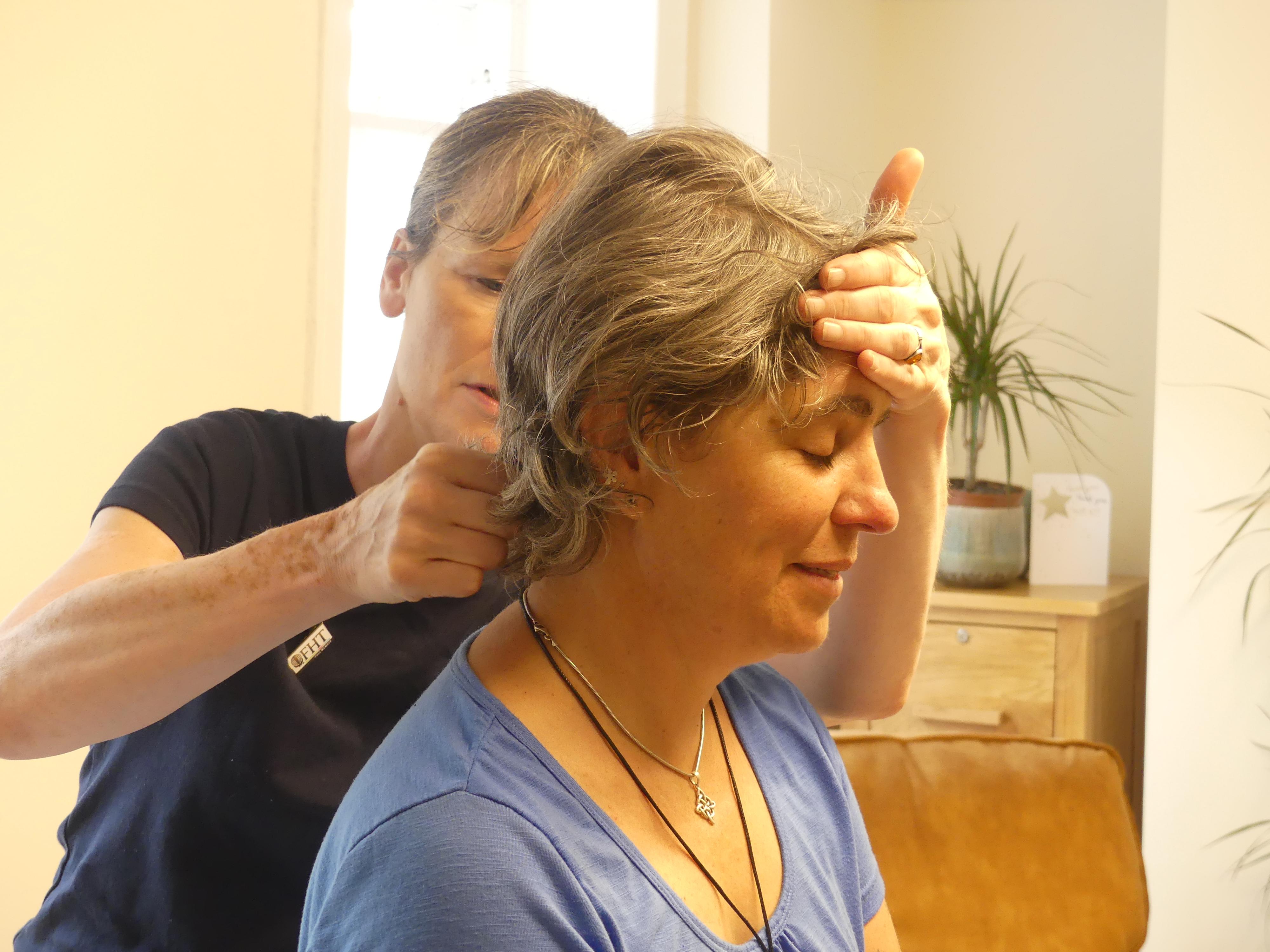
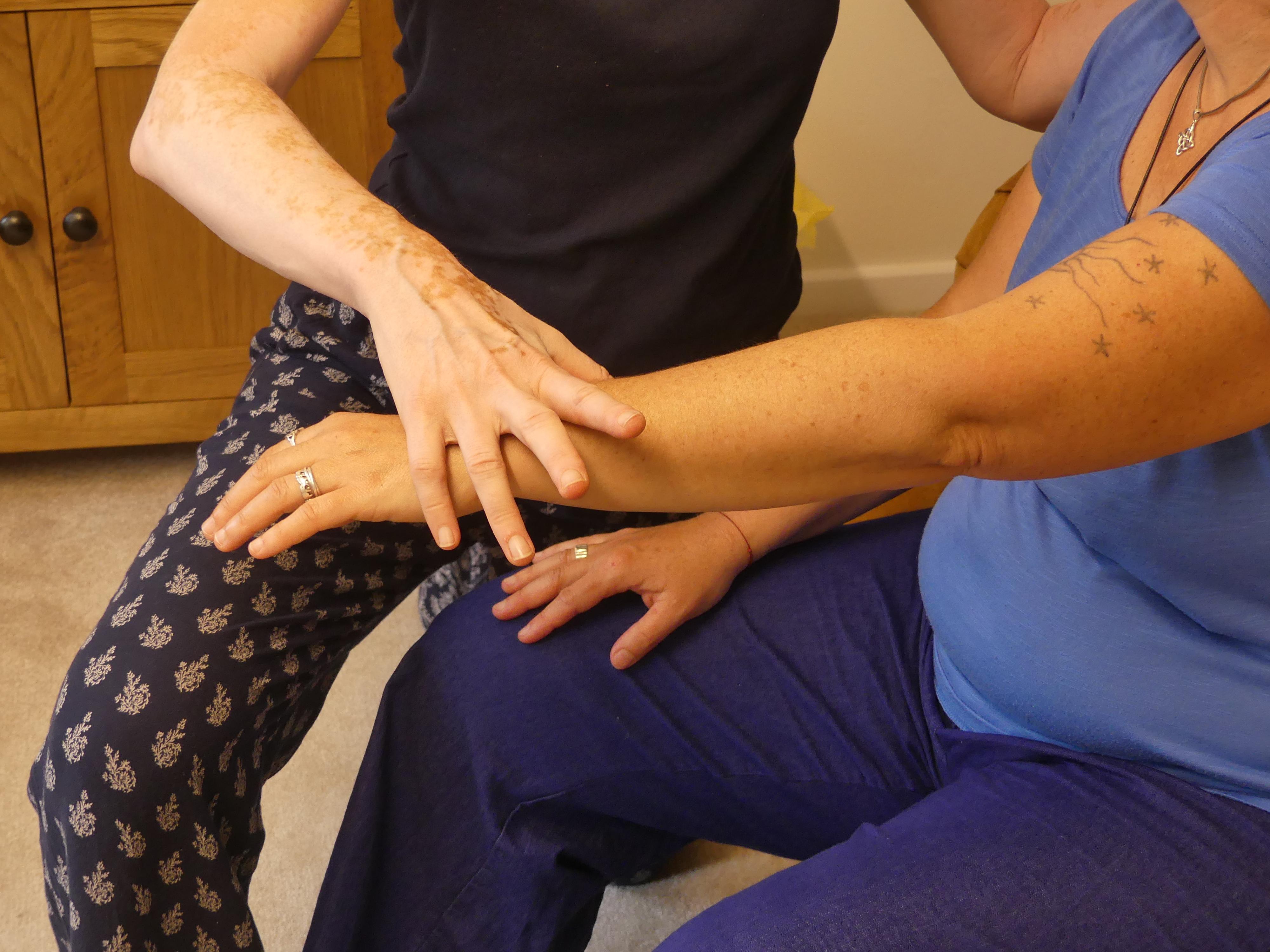
A personalised session focused on what you want help with and what is presenting for you.
Muscle testing to explore physical patterns, movement and areas of imbalance.
A deeper exploration of emotional patterns, beliefs, stress responses or sensitivities that may be contributing to the problem.
Hands-on techniques where appropriate to support the body and restore greater balance and ease.
Time to make sense of what emerges, so you can understand your body and your responses more clearly.
Practical support and next steps to help you continue the changes beyond the session.
Who is Kinesiology for?
Kinesiology may be helpful if you:
Are experiencing persistent pain, tension or physical discomfort that keeps returning or hasn't fully resolved.
Have problems with movement, posture, balance or physical function.
Are experiencing stress, anxiety, overwhelm or burnout and feel these are affecting your body as well as your mind.
Notice recurring emotional or behavioural patterns that you'd like to understand and change.
Feel that something is “not quite right”, but can't quite identify what is going on.
Want to take a more proactive approach to your wellbeing and look after your body before problems build up.
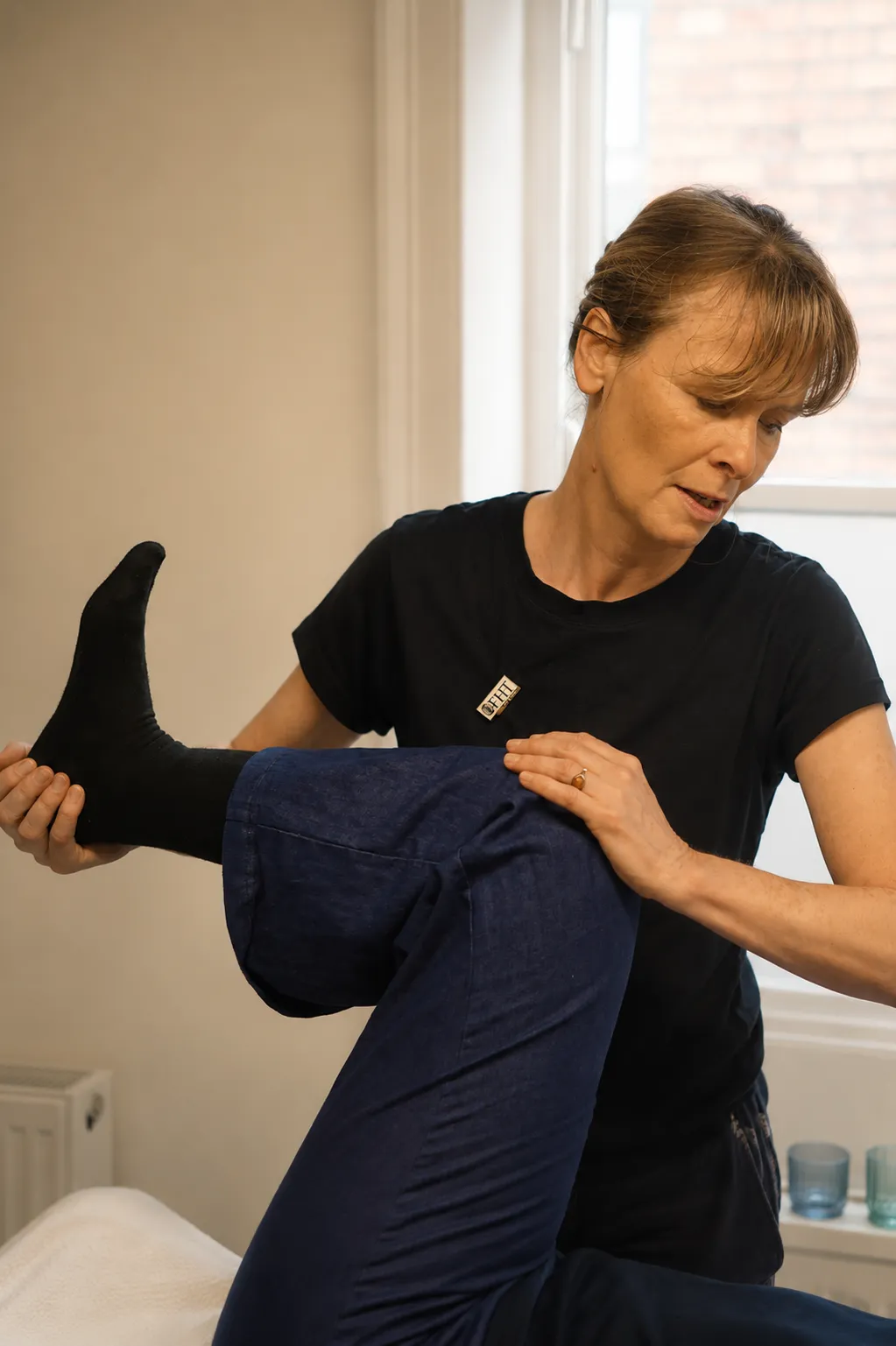
A kinesiology MOT
You don't have to wait until something is seriously wrong before coming for kinesiology. Some people use it as a regular MOT for their body and wellbeing — a chance to check in, notice where things may be becoming out of balance and give yourself some attention before small issues become bigger ones.
Frequently asked questions
What is Kinesiology?
Kinesiology is a holistic therapy that uses muscle testing to explore how your body is functioning and what may be contributing to physical, emotional or energetic patterns.
It is a broad discipline that can be used in different ways. Some forms focus primarily on muscles, movement and physical function, while others use muscle testing to explore deeper patterns that may be affecting how you feel.
At Hilary Dancing Body-Mind Therapeutics, I work across both approaches, tailoring the session to you and what you want to understand or change.
What is muscle testing?
Muscle testing is a technique used in Kinesiology to observe how a muscle responds to gentle pressure. In functional kinesiology, this can help explore muscle function, movement and physical balance.
I also use muscle testing in a more exploratory way, where it can provide another route into exploring emotional responses, beliefs, stress patterns or other factors that may be contributing to a problem.
It isn't about forcing a muscle or testing your strength. The testing is gentle and forms part of a wider process of observation, conversation and exploration.
How accurate is muscle testing?
Research into muscle response testing is ongoing. A 2025 study found that, overall, muscle response testing produced results that were better than chance, although there was considerable variation between practitioners and people being tested. The researchers concluded that further research is needed to understand how consistently the method can be used.
My approach is not to treat muscle testing as a diagnostic test or as a way of providing medical answers. I use it as a therapeutic and exploratory tool, alongside conversation and observation.
Many people also find that muscle testing gives them a useful and reliable way of exploring their experience, and develop trust in the process through what they notice over time. For me, what emerges from testing is a starting point for exploration rather than an absolute answer.
What's the difference between Applied Kinesiology and Touch for Health Kinesiology?
Kinesiology is a broad field, and there are several different approaches within it.
Applied Kinesiology is generally associated with a more clinical and physical approach to assessing the body, often involving detailed muscle testing and movement assessment.
Touch for Health Kinesiology, which is the approach I trained in, developed from Applied Kinesiology and combines muscle testing with techniques designed to support physical balance and wellbeing.
My own practice at Hilary Dancing Body-Mind Therapeutics has developed beyond the physical aspects of Touch for Health to include a more exploratory use of muscle testing, alongside my wider body-mind and energy work.
How is Kinesiology different from chiropractic, osteopathy, physiotherapy and massage?
The way I practice Kinesiology at Hilary Dancing Body-Mind Therapeutics can overlap with other treatments, particularly because functional kinesiology can involve looking at muscles, movement and physical balance. However, the approaches are different.
Physiotherapy, osteopathy and chiropractic each have their own professional training, assessment methods and treatment approaches, while massage primarily works with the body's soft tissues. Kinesiology uses muscle testing as a central part of its approach and can look beyond physical function to explore emotional, stress-related and other patterns that may be relevant to how you are feeling.
Kinesiology is complementary to these approaches rather than a replacement for them.
What kinds of problems can Kinesiology help with?
Kinesiology can help with all sorts of physical and emotional problems.You might be experiencing persistent pain or tension, problems with movement or posture, recurring physical symptoms, stress, anxiety or burnout. You may also have a pattern that keeps repeating and want to understand what might be contributing to it.
Sometimes people come because they have tried other approaches but still feel that something isn't quite resolved. Kinesiology can provide another way of exploring the physical and emotional aspects of what you are experiencing.
What happens in a Kinesiology session?
In a Kinesiology session with Hilary Dancing, we'll start by talking about what has brought you to the session and what you would like help with. Depending on what we're working on, I may use muscle testing to explore physical function, movement and postural patterns, or to explore other factors that may be contributing to what you're experiencing.
The session is tailored to you rather than following a fixed protocol. We may use hands-on techniques as part of the work, and there will be time to talk about what emerges and what you notice. You don't need to know which type of kinesiology you need before you come.
How many Kinesiology sessions will I need?
How many Kinesiology sessions you will need depends on what you want to work on and what we discover together. Some people come for a single session to explore a particular issue, while others find that a series of sessions gives them the opportunity to work more deeply and see how things change over time. I usually say that three sessions gives you chance to see how your body is responding and what might be possible.
The annual MOT package allows you to benefit from a regular Kinesiology session each month to keep your body working effectively and address any issues before they escalate.
If you want to work on a broader goal rather than one particular problem, my Whole-Person Change Programme provides a six-session framework in which I can draw on kinesiology alongside bodywork, energy healing and coaching as appropriate.
Can I have Kinesiology if I have a medical condition or have recently had surgery?
Kinesiology is a complementary therapy and isn't intended to diagnose or treat medical conditions or replace medical care. If you have a significant health condition, are undergoing treatment or have recently had surgery, it's important that you follow the advice of your medical team.
Depending on your circumstances, kinesiology may still be appropriate as complementary support, but I may need to adapt what we do or ask you to check with your healthcare professional first.
Please get in touch if you're unsure.
Do I need to believe in Kinesiology for it to work?
You don't need to have a particular belief about Kinesiology to come for a session. It's perfectly reasonable to be curious, uncertain or even sceptical.
I'll explain what I'm doing and why, and you can decide what feels useful and meaningful to you. I don't expect you to accept an interpretation simply because a muscle-testing response suggests something. We can treat what emerges as something to explore and see whether it resonates with your experience.
Looking for something different?
Courses, workshops and talks
Not everyone is looking for one-to-one support.
If you prefer to learn in a group setting rather than individually, I also offer courses and events throughout the year.
Resources and articles
If you're looking for information on how Kinesiology works, want to explore how it could support your Pilates practice, or just want to find out more, there's more reading in the online library.
What my clients say about working with me
This was the most practical coaching session I’ve had. Absolutely ideal for someone like me with loads of ideas and a mind racing at a hundred miles an hour. I’ve come away with a practical action plan for the next few weeks. Hilary is very thought-provoking, hugely knowledgeable and very inspiring.
My body relaxed more deeply than it has in a long time and I could feel myself letting go of long-held tension. I left feeling calmer, looser, and more at ease. I would happily recommend Hilary to anyone struggling with persistent pain, tension, or stress.
I felt safe enough to explore things I don’t often put into words. I came away with new perspectives on how my body responds to stress and the world around me. I’d recommend her to anyone who feels highly sensitive, easily overwhelmed, or curious about understanding themselves more deeply.